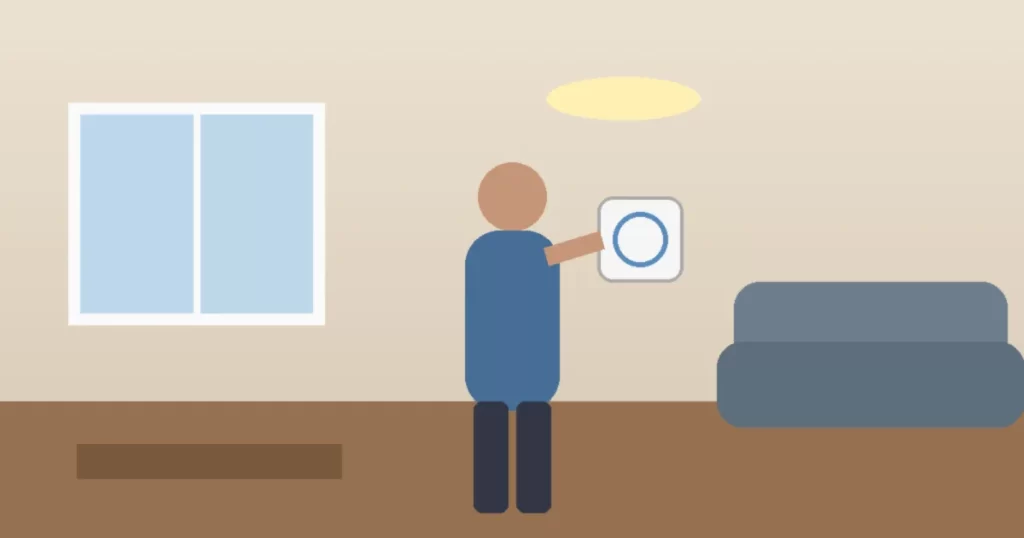
Your air conditioner is humming along, the fan is blowing, but the house is still sticky and warm. It is one of the most frustrating summer problems, and it usually shows up on the hottest day of the year.
The good news is that many causes are simple. Some take five minutes and cost nothing. Others need a licensed technician. Below are the 8 most common reasons your AC is not cooling, how to spot each one, and what to do about it.
First, Do a Quick Two-Minute Check
Before you dig in, hold your hand near a supply vent and compare that air to the return vent (the larger grille that pulls air in). A healthy system usually blows air about 15 to 20°F cooler than the air going in. If the difference is much smaller, something is limiting your cooling, and the list below will help you find it.
8 Common Reasons Your AC Is Not Cooling
1. Wrong Thermostat Settings
It sounds too easy, but thermostat mix-ups cause a lot of service calls. Check these settings:
- The mode is set to Cool, not Heat, Fan or Off.
- The fan is set to Auto. If it is set to On, the fan keeps blowing even when the compressor is resting, which can push warm air through the vents.
- The set temperature is actually below the current room temperature.
- The batteries are fresh, if your thermostat uses them. A dim or blank screen is a giveaway.
Smart thermostats can also follow a schedule or “eco” mode you forgot about, so check the app too.
2. A Dirty or Clogged Air Filter
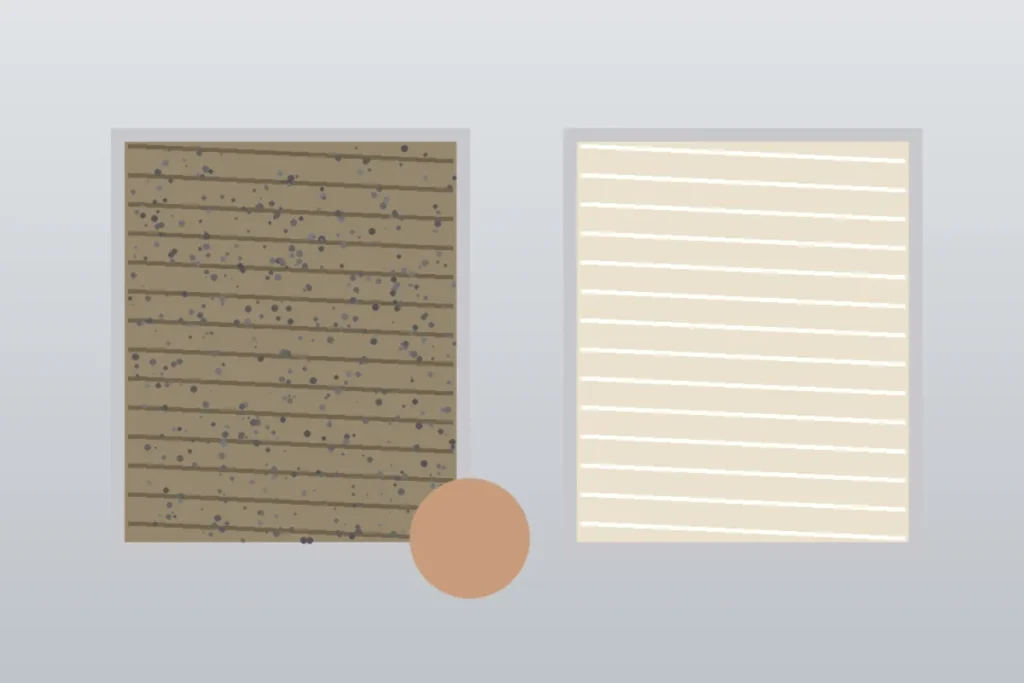
This is the most common reason an AC stops cooling well. A clogged filter chokes airflow, so less air passes over the cold coil and less cool air reaches your rooms. Over time it can even cause the coil to freeze.
Fix: Pull the filter out and hold it up to a light. If you cannot see light through it, replace it. Most standard 1-inch filters should be changed every 1 to 3 months, and more often if you have pets, allergies or a lot of dust. Make sure the arrow on the frame points toward the blower.
3. A Dirty or Blocked Outdoor Condenser
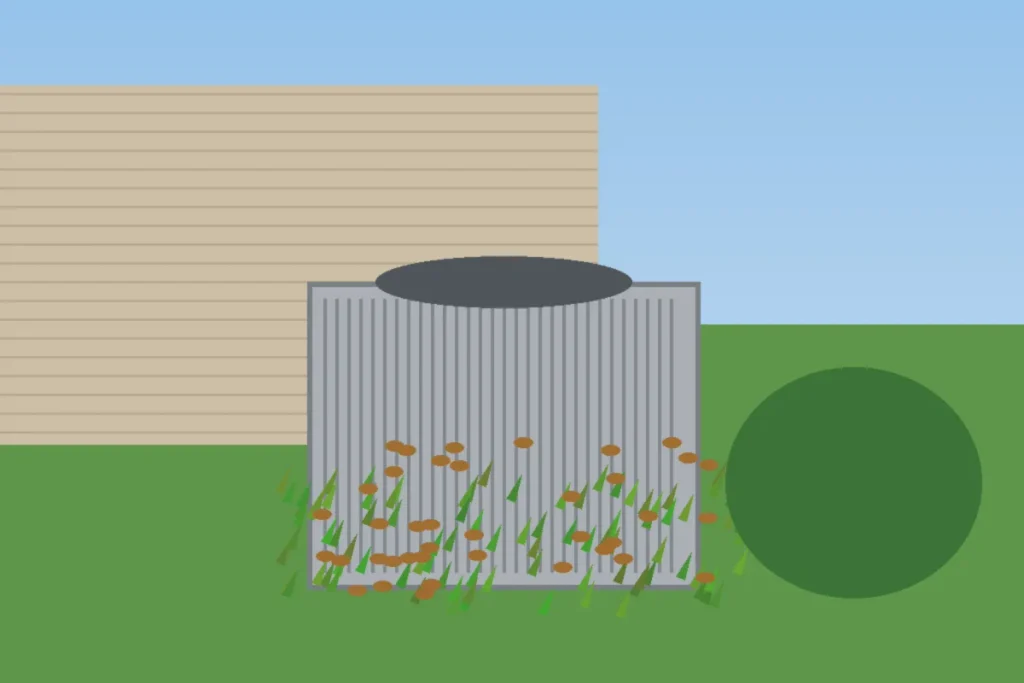
The outdoor unit’s job is to release the heat pulled out of your home. If its coils are caked in dirt, cottonwood fluff or grass clippings, or if bushes are crowding it, that heat has nowhere to go and your cooling drops.
Fix: Turn off power to the unit at the outdoor disconnect and the breaker. Clear away leaves and debris, trim plants back so there is roughly 2 feet of space around it, and gently rinse the fins from the inside out with a garden hose. Never use a pressure washer, since it can bend the fins.
4. A Frozen Evaporator Coil

If you see frost on the copper line near your indoor unit, or water pooling around it, the evaporator coil may be frozen. A frozen coil cannot absorb heat, so the system runs and runs without cooling. The usual causes are poor airflow (dirty filter, closed vents) or low refrigerant.
Fix: Switch the thermostat to Off and the fan to On to help the ice melt. This can take a few hours. Replace the filter, open all the vents, then restart the system. If the coil freezes again, call a technician, because low refrigerant is the likely cause.
5. Low Refrigerant From a Leak
Your AC does not “use up” refrigerant the way a car uses gas. If the level is low, there is a leak somewhere. Signs include warm air from the vents, a hissing or bubbling sound, ice on the lines and higher electric bills.
Fix: This is not a DIY job. In the US, handling refrigerant requires EPA Section 608 certification. A technician should find and repair the leak, not just top it off. If your system is older and uses R-22, which stopped being produced in the US in 2020, recharging can be very expensive, and replacement may make more sense.
6. A Failed Capacitor or Contactor
If the indoor fan runs but the outdoor unit is silent, or the outdoor unit hums without the fan spinning, the problem is often electrical. The capacitor gives the compressor and fan motor the jolt they need to start, and it is one of the most common parts to fail, especially after heat waves.
Fix: Check your breaker panel first and reset a tripped breaker once. If it trips again, leave it off. Capacitors hold a dangerous charge even when the power is off, so leave testing and replacement to a pro. The good news is that this is usually one of the cheaper AC repairs.
7. A Clogged Condensate Drain Line
Your AC pulls moisture from the air, and that water drains through a small pipe. When algae and gunk clog the line, many systems have a float switch that shuts the AC off to prevent water damage. You might notice water near the indoor unit, a full drain pan or a system that will not turn on.
Fix: Turn off the system, find the PVC drain line (often near the indoor unit), and clear it with a wet/dry vacuum from the outside end. Many homeowners pour a cup of distilled white vinegar into the access port every few months to keep it clear.
8. Leaky Ducts or Closed and Blocked Vents
Sometimes the AC is making cold air just fine, but it never reaches you. According to ENERGY STAR, a typical home loses about 20 to 30 percent of the air moving through its ducts to leaks, holes and poor connections. Closed vents and furniture sitting over registers also cut airflow.
Fix: Open every supply vent and move rugs, couches and curtains away from them. If some rooms stay much warmer than others, or you see disconnected ducts in the attic or crawlspace, have an HVAC company inspect and seal the ductwork.
Quick Troubleshooting Table
| What You Notice | Likely Cause | DIY or Pro? |
|---|---|---|
| System will not turn on at all | Thermostat, tripped breaker or drain line switch | DIY first |
| Weak airflow from vents | Dirty filter or blocked vents | DIY |
| Ice on copper lines or coil | Poor airflow or low refrigerant | DIY thaw, then pro if it returns |
| Outdoor unit silent or humming | Capacitor or contactor | Pro |
| Hissing sound and warm air | Refrigerant leak | Pro |
| Water around indoor unit | Clogged condensate drain | DIY |
| Some rooms warm, others fine | Leaky ducts or closed vents | DIY check, pro to seal |
Could Your AC Just Be Too Old or Too Small?
If none of the fixes above help, the system itself may be the problem. Central air conditioners usually last around 12 to 15 years. An older unit loses efficiency and may struggle on extreme days. A unit that is too small for your home will run nonstop without reaching the set temperature, while one that is too big cools in short bursts and leaves the air clammy.
Keep in mind that on very hot days, most systems are designed to keep the inside about 20°F below the outdoor temperature. If it is 105°F outside, a house sitting at 80°F may be normal, not broken.
When to Call an HVAC Technician
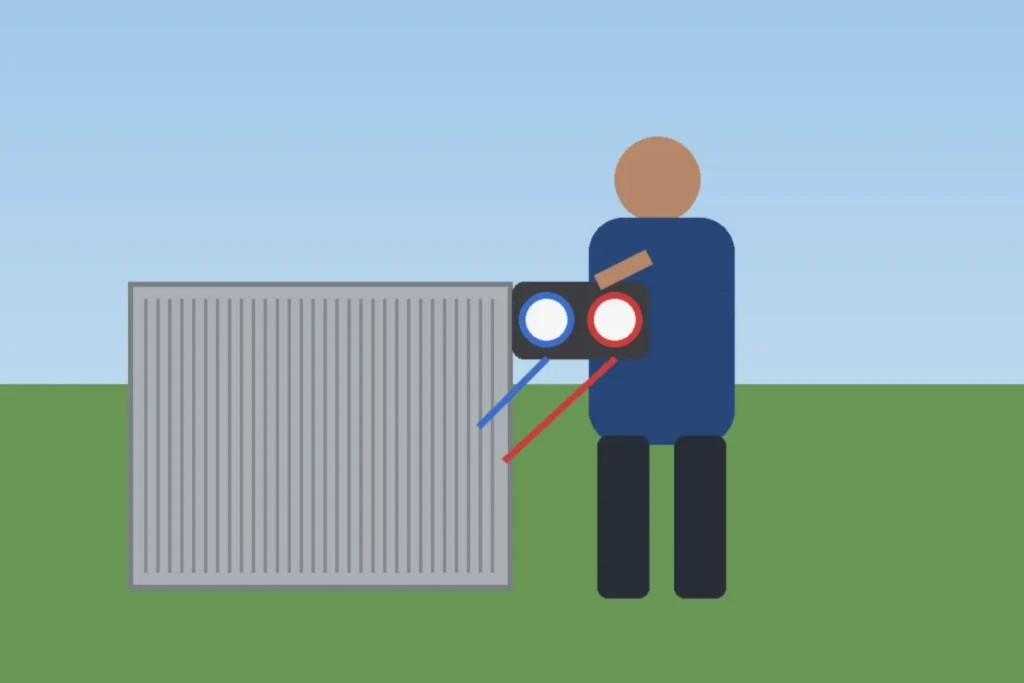
Call a licensed pro if you notice any of these:
- Ice that comes back after you replace the filter
- Hissing, bubbling or grinding sounds
- A breaker that trips more than once
- A burning smell from the indoor or outdoor unit
- The outdoor fan or compressor will not start
To save time, look for a local HVAC company with good reviews and same-day service. You can browse trusted local service providers on Dial Haryana and compare options before you book.
How to Keep Your AC Cooling All Summer
- Change the air filter every 1 to 3 months.
- Keep 2 feet of clear space around the outdoor unit.
- Flush the condensate drain line every few months.
- Book a professional tune-up each spring before the heat hits.
- Keep blinds closed on sunny afternoons to reduce heat gain.
Frequently Asked Questions
Why is my AC running but not cooling the house?
The most common causes are a dirty air filter, a blocked outdoor condenser, a frozen evaporator coil or low refrigerant. Start by checking the thermostat and replacing the filter, since those fix the problem in many homes.
Can I fix my AC not cooling myself?
Yes, for simple issues. You can adjust thermostat settings, replace the filter, clean around the outdoor unit, clear the drain line and thaw a frozen coil. Refrigerant leaks and electrical parts like capacitors need a licensed technician.
How long does it take for a frozen AC to thaw?
Usually a few hours, though heavy ice can take up to a day. Turn the thermostat to Off and the fan to On to speed it up, and do not chip at the ice.
How do I know if my AC is low on refrigerant?
Common signs are warm air from the vents, ice on the refrigerant lines, a hissing or bubbling noise and higher energy bills. Only a certified technician can confirm the level and repair the leak.
Should my AC be blowing cold air on a 100 degree day?
It should still blow cool air, but most systems can only keep the inside about 20°F cooler than outside. On a 100°F day, an indoor temperature near 80°F can be normal.