Every year, somewhere around late October, Gurgaon wakes up to that familiar grey sky. The sun looks like a pale coin, the far towers on Golf Course Extension disappear, and your phone’s air quality app turns from yellow to red. This year was no different. On October 21, 2026, the Commission for Air Quality Management (CAQM) invoked Stage I of GRAP across the NCR, with Gurugram’s AQI touching 216 that afternoon.
You cannot fix the air over the whole city. You can, however, make the air inside your flat or house a lot cleaner than the air outside. This guide explains what the AQI in Gurgaon actually means, what the GRAP stages change for you, and the steps that genuinely lower pollution at home, with no gimmicks.
What the AQI in Gurgaon Looks Like This Winter
Gurgaon did not get much of a break this year. Data from AQI.in showed the city’s average AQI (US scale) rising from 123 to 141 between mid-July and early August 2026, during the monsoon months that are usually the cleanest. Air did not reach the Good range even once in that period.
Winter is when things get serious. Last year gives a fair idea of what to expect:
- GRAP Stage I came into force on October 14, 2025, Stage II on October 19, and Stage III on November 11, 2025.
- In mid-November 2025, the Gurugram administration moved classes up to Class 5 to a hybrid mode because of the severe air.
- Some private monitors in the city logged hourly readings above 600 on the US scale on bad mornings in November 2025.
With Stage I already active since October 21, 2026, November and December are likely to bring several Very Poor and Severe days again.
Why Gurgaon’s Air Gets Worse in Winter
Pollution sources do not suddenly multiply in November. The weather simply stops clearing them away. Here is what happens:
- Temperature inversion: Cold air near the ground gets trapped under a warmer layer, so smoke and dust stay at breathing height.
- Slow winds: Calm winter days mean pollutants hang over the city instead of blowing out.
- Crop residue burning: Stubble fires in Punjab and Haryana add smoke, especially from late October to mid-November.
- Local sources: Traffic on NH-48 and the city’s arterial roads, constant construction dust, diesel generators, garbage burning and festival firecrackers all add up.
How to Read the AQI Numbers Correctly
India’s official AQI, run by the Central Pollution Control Board (CPCB), uses a 0 to 500 scale with six categories. Here is what each band means for your home routine:
| AQI (CPCB) | Category | What to do at home |
|---|---|---|
| 0 to 50 | Good | Open the windows and air out the house. |
| 51 to 100 | Satisfactory | Ventilate normally. Sensitive people can stay alert. |
| 101 to 200 | Moderate | Ventilate in short bursts. Keep the purifier handy. |
| 201 to 300 | Poor | Keep windows mostly shut. Run purifiers in main rooms. |
| 301 to 400 | Very Poor | Seal the house, run purifiers all day, skip outdoor exercise. |
| 401 to 500 | Severe | Stay indoors as much as possible. Use N95 masks if you must go out. |
Indian AQI vs US AQI: Why Your Apps Disagree
Many popular apps and home monitors show the US AQI, not the Indian one. The two scales use different formulas and labels. On the US scale, 101 to 150 is already “Unhealthy for Sensitive Groups” and anything above 300 is “Hazardous.” So a reading of 180 can be “Moderate” on the CPCB scale and “Unhealthy” on a US-scale app. Neither is wrong. Just check which scale you are looking at before you compare numbers with your neighbour.
The CPCB index is also capped at 500, which is why private apps sometimes show numbers like 700 or 800 on the worst mornings while the official figure stays at or below 500.
GRAP Stages and What They Change for You
The Graded Response Action Plan (GRAP) is the NCR’s emergency playbook for bad air. It is run by CAQM and kicks in stage by stage as the AQI worsens. Since a revision in November 2025, several curbs now apply one stage earlier than before.
| GRAP Stage | AQI Range | What it usually means for residents |
|---|---|---|
| Stage I | 201 to 300 (Poor) | Dust control at construction sites, checks on open burning and polluting vehicles, limits on diesel generator use. |
| Stage II | 301 to 400 (Very Poor) | Stricter dust control, higher parking fees to discourage driving, staggered timings for government offices in Gurugram and other NCR cities. |
| Stage III | 401 to 450 (Severe) | Pauses on most construction and demolition, curbs on older vehicles, hybrid classes for younger students, and possible work from home for part of office staff. |
| Stage IV | Above 450 (Severe+) | The toughest curbs, including truck entry limits and more school and office restrictions. |
Exact rules can change with each CAQM order, so check the latest notice on the CAQM website or local news when a new stage is announced.
10 Ways to Protect Your Home from Winter Pollution
These steps are listed roughly in order of impact. Doing the first three well will make the biggest difference.
1. Run a HEPA Air Purifier Sized for the Room
A good purifier is the single most effective tool you have against PM2.5 indoors. When shopping, look for:
- True HEPA filter: It traps at least 99.97% of particles at 0.3 microns, the size that is hardest to catch.
- Enough CADR: The Clean Air Delivery Rate tells you how much clean air the unit puts out. A common rule of thumb is a smoke CADR (in cubic feet per minute) of at least two thirds of your room’s area in square feet. A 150 sq ft bedroom needs about 100 CFM or more.
- A filter you can buy easily: In a Gurgaon winter, filters clog faster. Check the price and availability of replacement filters before you buy.
- No ozone: Skip ionisers or “ozone generators.” Ozone irritates the lungs and does not remove fine particles.
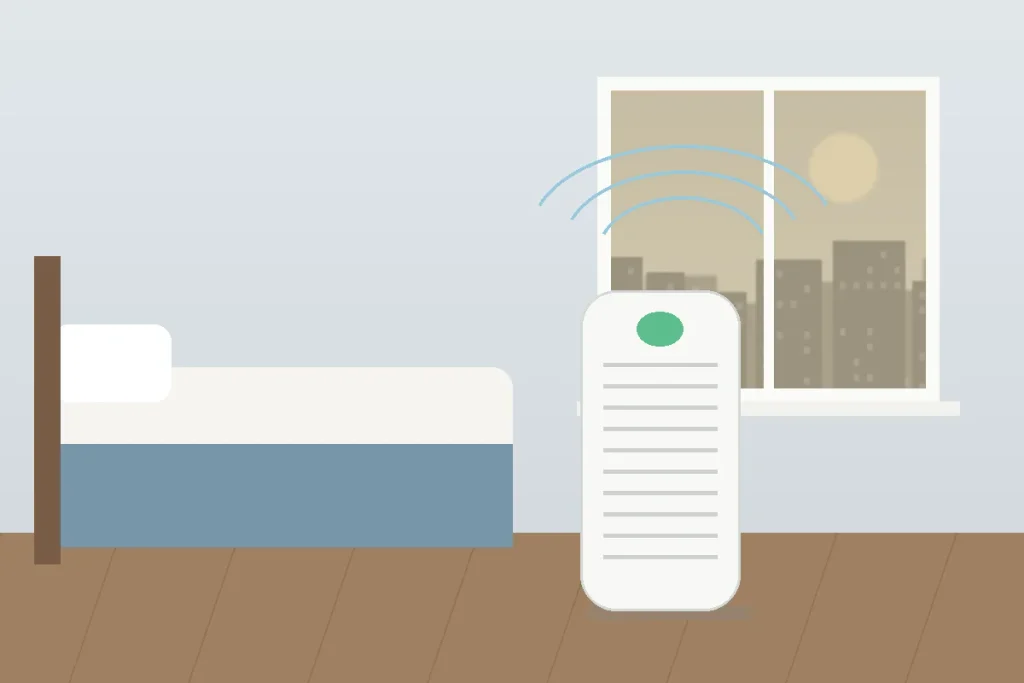
Keep the door and windows of that room closed while it runs. A purifier in an open room is trying to clean the whole street.
2. Seal the Gaps Around Windows and Doors
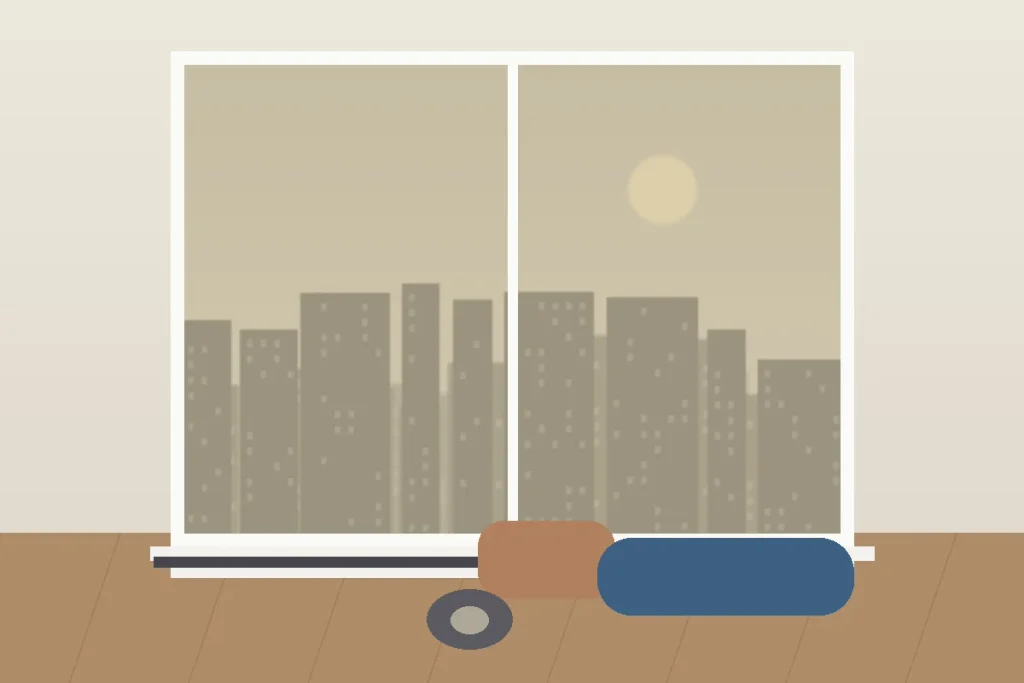
Many Gurgaon apartments have aluminium sliding windows and balcony doors that leave visible gaps in the track. Smog slips right through them. A weekend and a few hundred rupees can fix most of it:
- Stick self-adhesive foam or rubber weatherstrip along sliding window tracks and frames.
- Fit a door sweep or draft stopper under the main door and balcony door.
- Check AC pipe holes and exhaust fan openings, and fill gaps with sealant or foam.
- Keep unused bathroom exhaust fans covered when they are off.
3. Ventilate Smartly Instead of Never
Keeping every window shut for weeks is not the answer either. Cooking fumes, carbon dioxide and moisture build up indoors. The trick is timing. Pollution in Gurgaon usually peaks in the early morning and late night, and dips in the early afternoon when the sun warms the air and winds pick up a little. Check an hourly reading and open windows for 10 to 15 minutes when the number is lowest, then close up again.
4. Cut Down on Indoor Smoke Sources
A lot of indoor pollution is home-made. On high AQI days, try to avoid or limit:
- Agarbatti, dhoop and scented candles
- Mosquito coils (use a plug-in repellent or nets instead)
- Deep frying and tadka without a running chimney or exhaust
- Angithi, coal or wood fires for heating
- Smoking indoors, which should not happen at any AQI
If you cook on gas, always switch on the kitchen chimney or exhaust fan, and clean its filter before winter starts.
5. Clean Wet, Not Dry
A jhaadu throws fine dust right back into the air. Switch to wet mopping for floors and a damp microfibre cloth for windowsills, shelves and fan blades. If you use a vacuum cleaner, one with a HEPA filter keeps the dust it collects from blowing out of the exhaust. Wipe the inside of window frames and balcony door tracks twice a week during smog season, since that is where outdoor dust settles first.
6. Create One Clean Room
If you can only afford one purifier, put it in the bedroom. You spend seven to eight hours there every night, and a small closed room is much easier to keep clean than an open living and dining area. Run the purifier for 30 to 60 minutes before bedtime with the door closed, then leave it on overnight on a quiet setting.
7. Use the AC and Fans Wisely
Split ACs only recirculate indoor air, so they do not pull in outside smog. Their basic mesh filters will not catch PM2.5, though, so do not count on them as purifiers. Clean those filters regularly so they do not blow trapped dust around.
On a tight budget, a DIY box fan filter is a proven backup. Strap a MERV 13 furnace filter (available online) to the back of a box or table fan. Research during US wildfire seasons found that these simple setups reduce fine particles well in a small room.
8. Do Not Rely on Indoor Plants
Money plants and snake plants make a home nicer, but they will not clean the air in any meaningful way. The famous NASA plant study was done in small sealed chambers. Later research found you would need hundreds of plants per room to match even a basic purifier. Keep the plants for how they look, not as a pollution fix.
9. Protect Your Car and Commute
Your car is a small room that sits in the worst traffic smog. Replace the cabin air filter before winter (a PM2.5 or activated carbon type is worth the extra cost) and keep the AC on recirculate in heavy traffic. When you walk or take the metro on Poor or worse days, wear a well-fitting N95 or FFP2 mask. Cloth and surgical masks do very little against fine particles.
10. Track the Air Daily, Indoors and Out
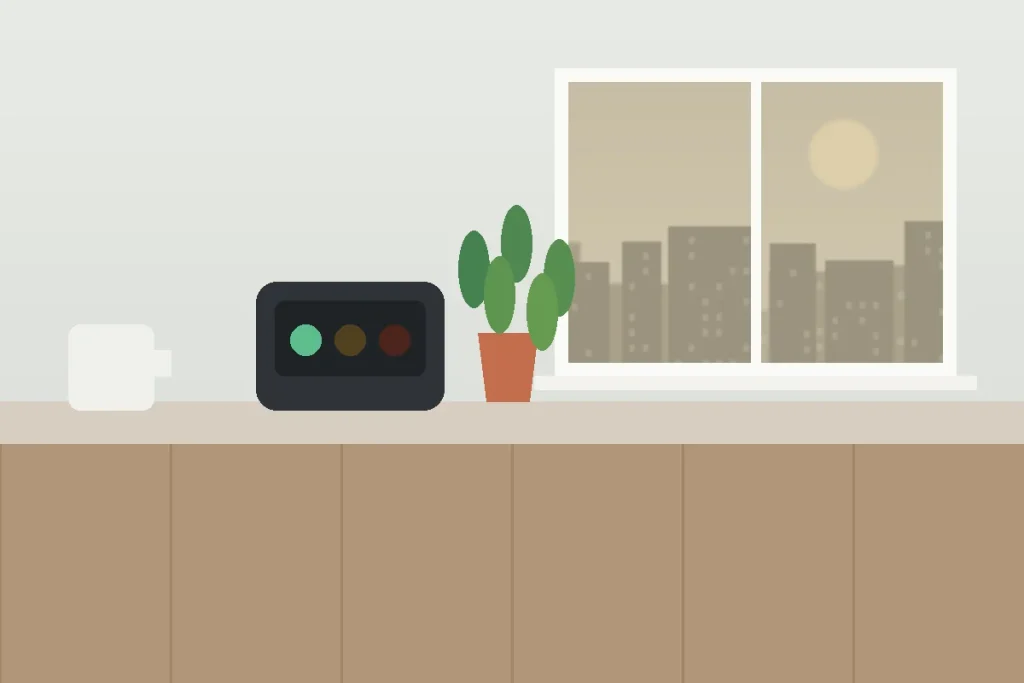
Use the CPCB’s official SAMEER app or a trusted AQI app for outdoor readings and hourly trends in your sector. Indoors, a basic PM2.5 monitor helps you see whether your purifier and sealing are actually working. If indoor PM2.5 stays high with the windows closed and the purifier on, the unit may be too small or the filter may be due for a change.
Extra Care for Kids, Elders and People with Asthma
Children breathe faster and spend more time active, while older adults and people with asthma, COPD or heart conditions feel the effects first. In smog season:
- Move outdoor play and morning walks indoors on Very Poor and Severe days.
- Keep the clean room ready for anyone who is unwell.
- Make sure inhalers and regular medicines are stocked and not expired.
- Watch for coughing, wheezing, chest tightness or unusual tiredness, and see a doctor if symptoms do not settle.
This article is general information, not medical advice. If you or a family member has a lung or heart condition, ask your doctor for a winter plan.
Quick Smog Day Checklist for Your Home
- Check the AQI in Gurgaon first thing in the morning
- Keep windows and balcony doors shut during the morning and night peaks
- Run purifiers in the rooms you are using, with doors closed
- Turn on the chimney every time you cook
- Skip agarbatti, coils and candles
- Wet mop instead of sweeping
- Air out the house for a few minutes in the cleanest afternoon window
- Carry an N95 mask when you step out
Finding Help Locally in Gurgaon
Some of this work is easier with a professional. Before the worst weeks arrive, it is worth booking AC servicing and filter cleaning, getting a carpenter or window specialist to seal leaky sliding frames, and having your kitchen chimney serviced. If someone at home has breathing trouble, a check-up with a pulmonologist before December is a smart move. You can find trusted local service providers and doctors across the city on Dial Haryana.
Frequently Asked Questions
What is a safe AQI level in Gurgaon?
On India’s CPCB scale, 0 to 100 (Good to Satisfactory) is considered safe for most people. Readings of 201 and above are Poor, and anything over 300 can affect even healthy people with long exposure.
When is the AQI in Gurgaon at its worst?
The worst stretch usually runs from late October to mid-January, with November often the peak because of crop burning, calm winds and cold temperatures. During the day, early mornings and late nights tend to be the most polluted.
Does an air purifier really work against Gurgaon pollution?
Yes, if it has a true HEPA filter, enough CADR for the room and you keep doors and windows closed while it runs. A well-matched purifier can bring indoor PM2.5 far below outdoor levels.
Should I keep my windows closed all winter?
Keep them closed during high pollution hours, but open them for 10 to 15 minutes when the AQI dips, usually in the early afternoon. This clears out cooking fumes, moisture and stale air without letting in the worst smog.
Why does my AQI app show a different number from the government reading?
Many apps use the US AQI scale, while the CPCB uses India’s own scale capped at 500. The formulas and category labels are different, so the same air can show different numbers.
Do indoor plants reduce AQI at home?
Not in a noticeable way. You would need an impractical number of plants to match even a small air purifier. Plants are good for your mood and decor, but not a real fix for PM2.5.
Final Thoughts
The AQI in Gurgaon will keep swinging between Poor and Severe for the next couple of months, and that part is out of your hands. What happens inside your home is not. A right-sized HEPA purifier, sealed windows, smarter ventilation and fewer indoor smoke sources can make your home a genuine refuge through the smog season. Start with the bedroom, check the readings daily, and build from there.