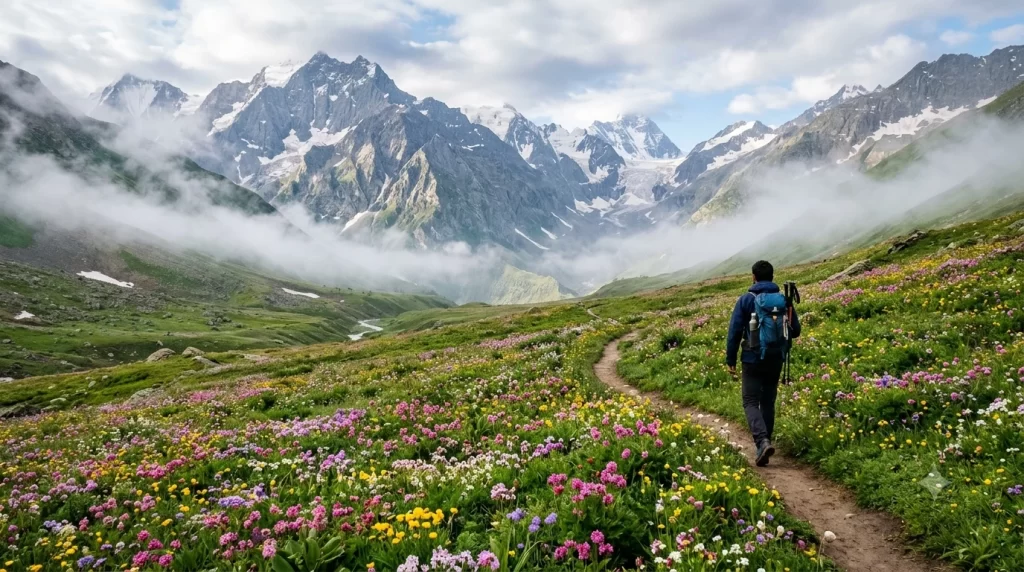
Every monsoon, a high glacial valley in the Indian Himalaya turns into one of the most colorful places you can walk to. The Valley of Flowers trek takes you through pine forest and stone trails to a meadow carpeted with hundreds of wildflower species, framed by snowy ridges. It is a UNESCO World Heritage Site, it needs no technical climbing, and most reasonably fit people can do it.
This guide covers everything you need to plan it: when the park opens, how to get permits, how to reach the trailhead, a day-by-day itinerary, what it costs, what to pack, and the mistakes first-timers make. The 2026 season closed on October 31, so the details here are set up for planning a 2027 trip.
Valley of Flowers Trek at a Glance
| Detail | Information |
|---|---|
| Location | Chamoli district, Uttarakhand, India (Garhwal Himalaya) |
| Season | June 1 to October 31 (weather permitting) |
| Peak bloom | Mid-July to mid-August |
| Base village | Ghangaria, about 3,000 m (9,800 ft) |
| Valley altitude | About 3,350 to 3,658 m (11,000 to 12,000 ft) |
| Total trek distance | Roughly 26 to 30 km round trip from Pulna, plus about 12 km if you add Hemkund Sahib |
| Difficulty | Easy to moderate |
| Days needed | 4 days from Govindghat, about 6 to 7 days from Delhi or Rishikesh |
| Entry fee (2026) | ₹200 for Indian citizens, ₹800 for foreign nationals, valid 3 days |
What Makes the Valley of Flowers Special
The Valley of Flowers National Park covers about 87.5 sq km in the upper Bhyundar valley. British mountaineer Frank Smythe stumbled into it in 1931 while returning from Mount Kamet, came back in 1937, and his 1938 book The Valley of Flowers made the place famous. India declared it a national park in 1982, and in 2005 UNESCO added it to the Nanda Devi World Heritage Site, which was first listed in 1988.
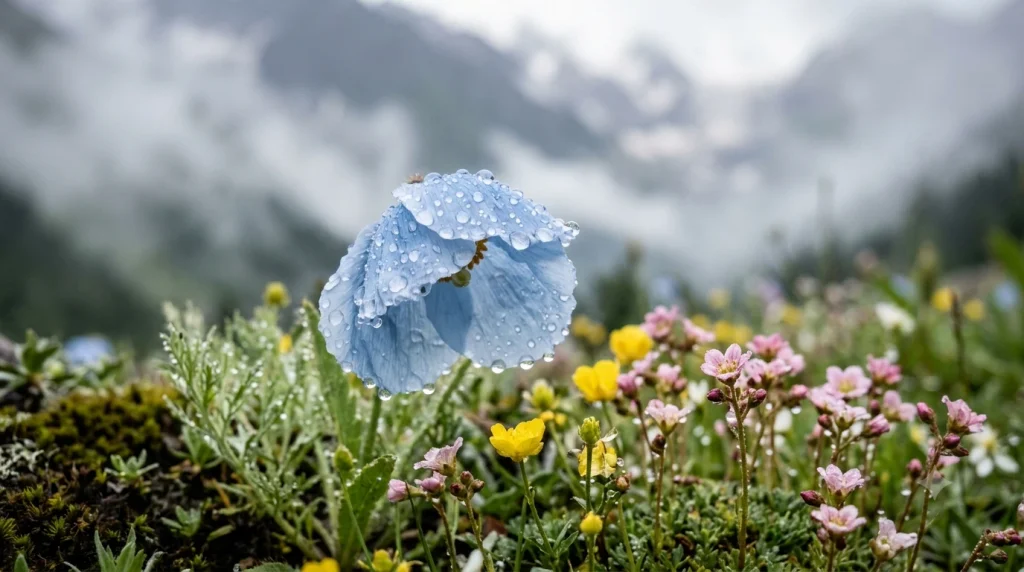
The valley floor is roughly 5 km long and 2 km wide, cut by the Pushpawati river. In peak season you will see more than 500 species of flowering plants, including blue poppies, cobra lilies, primulas, geraniums and potentillas. Musk deer, Himalayan black bears and snow leopards live on the higher slopes, though sightings are rare.
There is also a religious side to the route. Ghangaria is the base for Hemkund Sahib, a Sikh gurdwara beside a glacial lake. In July and August you will share the lower trail with thousands of pilgrims, which keeps the path busy, well maintained and lined with tea stalls.
Best Time for the Valley of Flowers Trek
The park opens on June 1 and closes on October 31 each year, though snow or landslides can shift those dates. What you see depends heavily on the month.
| Month | What to expect |
|---|---|
| June | Snow patches and early blooms, fewer crowds, mostly dry |
| Early to mid-July | Monsoon arrives, meadows turn green and flowers start spreading |
| Mid-July to mid-August | Peak bloom and peak crowds, frequent rain |
| Late August to September | Fewer flowers but clearer skies and good views |
| October | Golden, quiet, cold, little bloom left |
If flowers are the whole point, aim for the last week of July through the third week of August. If you care more about clear mountain views and quieter trails, early September is a fair trade. Keep in mind that the monsoon also brings landslides on the highway to Govindghat, so build at least one spare day into any July or August plan.
Permits, Entry Fees and Park Rules
You need an entry permit from the Uttarakhand Forest Department. For the 2026 season the fee was ₹200 for Indian citizens and ₹800 for foreign nationals, valid for three days, with children under 12 free. Fees have changed in recent years, so confirm the current rate before you go.
- Where to get it: online through the Forest Department’s Valley of Flowers portal in advance, or at the forest check post just outside Ghangaria.
- Documents: a government photo ID. Foreign visitors should carry their passport and Indian visa.
- Entry hours: roughly 7 AM to 2 PM, and you must be out of the park by 5 PM.
- No overnight stays: camping inside the park is not allowed, so you sleep in Ghangaria.
- No mules inside: ponies can carry you to Ghangaria but not into the valley itself.
- Leave the flowers: picking plants, littering and leaving the marked trail are prohibited.
Because the permit covers three days, many photographers enter the valley twice: once on arrival day for the lower meadows and again the next morning to walk deeper toward the glacier end.
How to Reach the Valley of Flowers
The trip happens in two parts: a long road journey to Govindghat, then a short drive and a trek.
Getting to Govindghat
- By air: the nearest airport is Jolly Grant (Dehradun), about 290 km from Govindghat. International visitors usually fly into Delhi first.
- By train: the closest major railheads are Haridwar and Rishikesh.
- By road: Govindghat is roughly 500 km from Delhi and about 270 to 290 km from Rishikesh or Haridwar along the Badrinath highway. Expect 9 to 11 hours from Rishikesh because of mountain roads. Shared jeeps, buses and private taxis run this route, and most people break the drive with a night in Joshimath (now officially Jyotirmath) or Govindghat.
Govindghat to Ghangaria
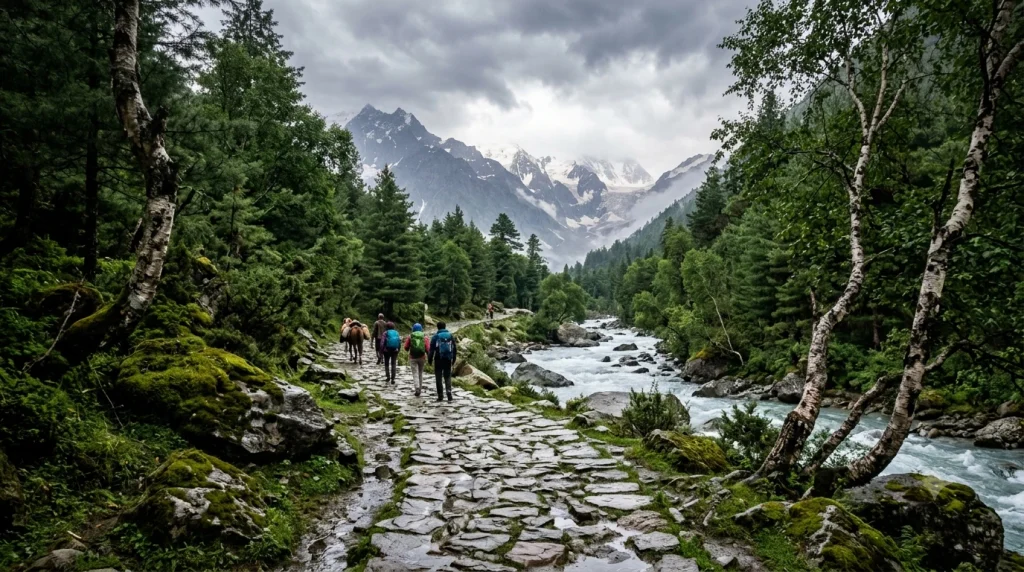
A motorable road now runs about 4 km from Govindghat to Pulna, where shared jeeps drop trekkers for a small fare. From Pulna it is a 9 to 10 km walk to Ghangaria on a wide stone path that climbs steadily beside the river. Most people take 4 to 6 hours. Ponies and porters are available at Pulna if you want help with your bag or with the climb.
A helicopter shuttle also runs between Govindghat and Ghangaria in season. The flight takes only a few minutes and has cost around ₹3,500 to ₹4,000 per person one way, but it depends entirely on weather and often stops on heavy monsoon days.
Ghangaria to the Valley
From Ghangaria, the trail to the park gate and into the valley is about 4 km one way, climbing to around 3,500 m. Allow 2 to 3 hours to reach the main meadows, then as much time as you can spare inside before the 5 PM exit. There is no helicopter or pony option for this stretch, so everyone walks it.
Sample 6-Day Valley of Flowers Itinerary from Rishikesh
- Day 1: Rishikesh to Joshimath or Govindghat. Long scenic drive along the Ganga and Alaknanda rivers. Start early to clear the hills in daylight.
- Day 2: Govindghat to Pulna by jeep, then trek to Ghangaria. Take it slow and drink plenty of water. Check in to your guesthouse and rest.
- Day 3: Ghangaria to the Valley of Flowers and back. Leave right after the gate opens to get the best light and the most time in the meadows.
- Day 4: Hemkund Sahib (optional) or a second valley visit. The Hemkund climb is steep, so start by 6 AM. Return to Ghangaria by afternoon.
- Day 5: Ghangaria to Govindghat, then drive toward Joshimath or Pipalkoti. The descent is quicker but hard on the knees.
- Day 6: Drive back to Rishikesh. Keep the evening free in case landslides slow the road.
Coming from Delhi, add a day at each end for the drive or train to Rishikesh and back. Visitors flying in from the US should plan on 9 to 10 days total, including a recovery day after the long flight.
Adding Hemkund Sahib to Your Trip
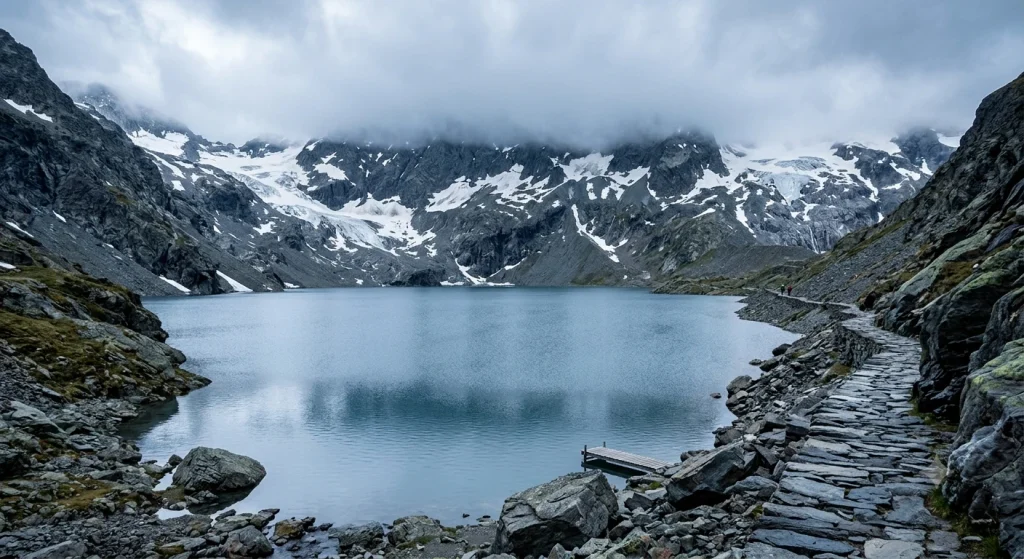
Hemkund Sahib is a Sikh gurdwara beside a glacial lake at roughly 4,300 m (about 14,100 ft), about 6 km above Ghangaria. The climb gains more than 1,200 m in a single morning, which makes it the hardest day of the whole trip. The shrine usually opens in late May and closes in early October, so it overlaps with most of the valley season.
Visitors of every faith are welcome. Cover your head, remove your shoes before entering, and if you have time, accept the hot tea or khichdi served at the langar. Ponies run on this trail too, and the alpine slopes near the top are one of the best places to see the brahma kamal flower in August.
How Difficult Is the Valley of Flowers Trek?
It is rated easy to moderate. The trails are well defined and there are no scrambles or exposed ledges. What makes it tiring is the steady climbing, the rain, and the altitude.
- You will walk about 8 to 14 km on most trekking days.
- Ghangaria sits near 3,000 m and the valley reaches about 3,600 m, high enough for mild altitude symptoms like headaches or poor sleep.
- Training with brisk walks, stairs or hikes of 8 to 10 km for a month beforehand makes a real difference.
- Kids around 8 and older who hike regularly often manage fine, and ponies help for the Pulna to Ghangaria stretch.
Ascend slowly, stay hydrated, and head down if headaches get worse or you feel breathless at rest. If you have a heart or lung condition, talk to your doctor before booking.
Valley of Flowers Trek Cost
You can do this trek independently or with an organized group. Rough per-person costs for a do-it-yourself trip from Rishikesh:
| Expense | Approximate cost |
|---|---|
| Shared jeep or bus, Rishikesh to Govindghat and back | ₹1,500 to ₹3,000 |
| Private taxi for the full trip (split between a group) | ₹4,000 to ₹6,000 per day for the vehicle |
| Govindghat to Pulna jeep | About ₹50 to ₹100 each way |
| Guesthouse in Ghangaria | ₹800 to ₹3,000 per night in peak season |
| Food | ₹500 to ₹1,000 per day |
| Park entry | ₹200 (Indian) or ₹800 (foreign) |
| Pony or porter (optional) | Varies by distance and season |
| Helicopter, Govindghat to Ghangaria (optional) | About ₹3,500 to ₹4,000 one way |
A budget traveler can do the whole trip from Rishikesh for roughly ₹10,000 to ₹15,000 (about $115 to $175). Organized group treks with transport, stays, meals and a guide usually run higher. If you are comparing this with a beach holiday from the capital, our Goa trip cost from Delhi guide breaks down a very different kind of budget.
Where to Stay
Ghangaria is the only overnight base, a small village of guesthouses, gurdwara lodging and basic hotels that exists only during the season. Rooms are simple, hot water may come in buckets, and power can be patchy. Book ahead for late July and August, when pilgrims fill every room.
Govindghat, Joshimath and Pipalkoti have more choice for the nights before and after the trek.
What to Pack
- Broken-in waterproof hiking boots with good grip
- A real rain jacket and rain pants, plus a pack cover or poncho
- Quick-dry trekking pants and shirts, no cotton jeans
- A fleece or light down jacket for cold mornings at Ghangaria
- Trekking poles for the descents
- Dry bags or zip bags for your phone, camera and documents
- Sunscreen, sunglasses and a hat, since UV is strong at altitude
- Basic medicines, blister care and any altitude medication your doctor recommends
- Enough cash, because card payments and ATMs are unreliable past Joshimath
- Photo ID or passport, plus a printed or saved copy of your permit
Tips for International Travelers
- US citizens need an Indian visa, and the e-Visa is the easiest route for tourism.
- Mobile signal is weak around Ghangaria. Download offline maps and tell someone your plans before you leave Govindghat.
- The trail is busy and generally safe, but solo travelers may find a local guide useful for history, flower identification and logistics.
- Food along the route is simple and vegetarian. Stick to freshly cooked meals and bottled or filtered water.
- Monsoon road delays are common. Do not book a tight onward flight right after the trek.
Common Mistakes to Avoid
- Going too early in June and expecting full bloom.
- Skipping the buffer day in monsoon months.
- Arriving at the park gate late and having only an hour or two inside.
- Relying on the helicopter without a backup plan for bad weather.
- Packing cotton that never dries in the rain.
Frequently Asked Questions
Is the Valley of Flowers trek difficult?
It is an easy to moderate trek on well-marked trails. The main challenges are steady uphill walking, rain and altitude up to about 3,600 m, so some basic fitness training helps.
When is the Valley of Flowers open?
The park is open from June 1 to October 31 each year, subject to weather. Peak bloom usually falls between mid-July and mid-August.
How much is the Valley of Flowers entry fee?
For the 2026 season it was ₹200 for Indian citizens and ₹800 for foreign nationals, valid for three days. Children under 12 entered free. Check the current fee before you travel.
Can you stay overnight inside the Valley of Flowers?
No. Camping and overnight stays are not allowed inside the park. Trekkers stay in Ghangaria, about 4 km away, and must leave the valley by 5 PM.
Can you reach the Valley of Flowers without trekking?
Partly. A helicopter or pony can take you from Govindghat or Pulna to Ghangaria, but the final 4 km from Ghangaria into the valley must be walked.
How many days do you need for the Valley of Flowers trek?
Plan on 4 days from Govindghat, or about 6 to 7 days round trip from Rishikesh or Delhi. Add a spare day in July and August for possible road delays.